The record of things that may simply elevate blood sugar ranges is lengthy, however the Somogyi impact could also be one of many strangest.
Let’s take a more in-depth have a look at what the Somogyi impact really is and what to do if it occurs to you.
What’s the Somogyi impact?
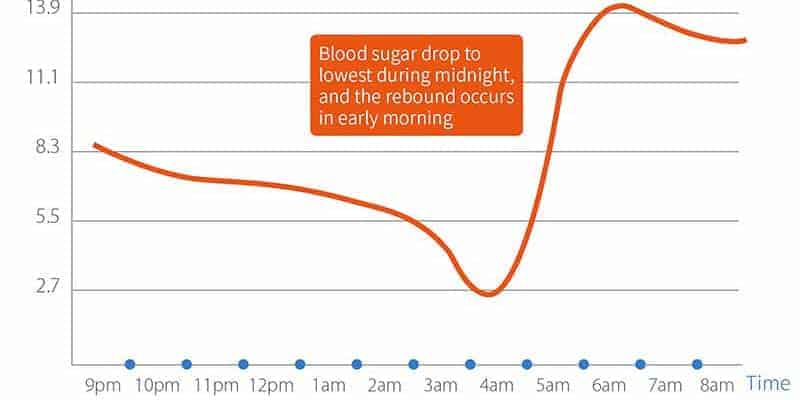
The Somogyi impact is when an individual experiences extreme hypoglycemia throughout sleep, adopted by a big rise in blood sugar ranges that goes unnoticed till one wakes up.
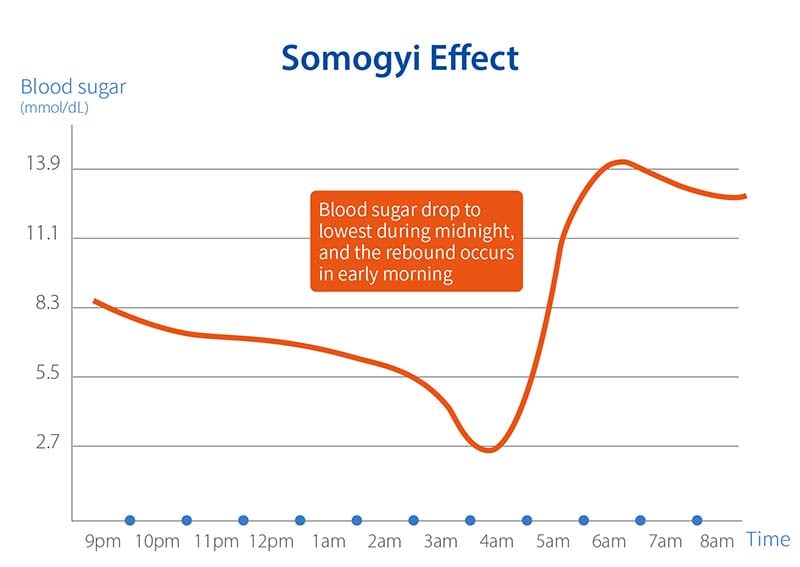
Through the Somogyi impact, extreme hypoglycemia happens with out awakening from deep sleep. The liver then responds by releasing saved glycogen and breaking it down into glucose, returning blood sugar ranges to protected ranges.
Individuals experiencing this situation typically discover that they merely go to mattress with out elevated blood sugar ranges. lowAnd it’s possible you’ll get up with very excessive blood sugar ranges (normally over 250 mg/dL) with no clear rationalization for the spike.
That is your physique’s self-defense. Nonetheless, this solely happens if the hypoglycemia is extreme sufficient to trigger the discharge of glycogen from the liver.
Though this physiological glycogen “backup plan” can happen at different instances of the day, the Somogyi impact refers to extreme hypoglycemia and reactionary highs that happen particularly throughout sleep.
What causes the Somogyi impact?
That’s, it’s the results of taking in additional insulin than your physique wants together with different variables.
- Taking an excessive amount of insulin proper earlier than or after train
- An excessive amount of insulin taken with meals
- An excessive amount of insulin to appropriate hyperglycemia
- Forgetting to eat even when taking insulin
- Are taking non-insulin medication that decrease blood sugar ranges
- Insulin pump failure
- By chance taking the incorrect dose/kind of insulin
Much like juggling the numerous variables of blood sugar administration all through the day, the Somogyi impact is without doubt one of the extra severe penalties of maximum blood sugar fluctuations.
Remember the fact that fast-acting insulin stays in your physique for about 4 hours. This implies insulin taken at 9pm could cause extreme hypoglycemia at midnight or 1am.
Balancing blood sugar ranges and insulin isn’t simple.
In the event you suppose you have skilled the Somogyi impact…
Sadly, there are various issues that may trigger excessive blood sugar within the morning.
It’s not simple to pinpoint the numerous variables that will have affected blood sugar ranges. You in all probability (and hope) will not expertise the Somogyi impact over and over with out waking up sooner or later in the course of the evening with regular hypoglycemia signs.
First, discuss to your well being care workforce or diabetes educator about your considerations and the potential Somogyi impact.
Then, set an alarm for just a few days to get up a few times in the course of the evening to verify your blood sugar ranges.
Third, share your blood sugar outcomes along with your healthcare workforce to pinpoint proof of the Somogyi impact. This helps alter insulin and different medicines.
Lastly, for those who aren’t already utilizing CGM, begin a dialog along with your medical workforce. CGM can shortly present life-saving insights into these blood sugar mysteries.
Different potential causes of morning hyperglycemia
In the event you suppose that your excessive blood sugar ranges within the morning should not because of the Somogyi impact, Ask your self if one thing like the next is feasible as an alternative:
Basal/background insulin is simply too low
In the event you frequently expertise extreme hyperglycemia within the morning, this can be the case. this Or as a consequence of one of many different variables under. In actuality, it’s possible you’ll simply want to regulate the background insulin dose (through the pump’s basal pace). or long-acting insulin dosage).
Chances are you’ll marvel, “If my weight and weight loss program are the identical, why do I want extra insulin?”
Different variables can have a big effect, reminiscent of elevated day by day stress ranges, decreased exercise ranges, and new medicines you take.
Speak to your well being care workforce about adjusting your basal/background insulin to stop this repeated rise in blood sugar ranges.
daybreak phenomenon
The “daybreak phenomenon” can simply be described because the frequent spikes that comply with the second your ft hit the ground within the morning.
The reason for this recurrent hyperglycemia and insulin resistance is a wholesome, regular a part of the human physique. Hormones like cortisol, testosterone, and glycogen all play a job, however additionally they inevitably require extra insulin.
Many individuals merely take a small bolus of insulin to account for the spike in blood sugar this causes. (Personally, I take one unit of insulin proper after I get up and verify my blood sugar until it is low. After that, I normally let the daybreak phenomenon elevate my blood sugar.)
Eat meals excessive in fats and carbohydrates within the night
For instance, even for those who took in sufficient insulin to technically cowl the carbs and fats on that pizza you ate at 8 p.m. final evening, the long-term results of insulin resistance from high-fat meals could cause your blood sugar ranges to spike the subsequent morning when your massive meal bolus wears off.
A easy resolution to that is to extend your basal fee or take one other small dose of fast-acting insulin whenever you get up within the morning.
too little sleep time
In the event you go to mattress at 3 a.m. after an evening out with buddies or staying as much as research for an examination, your physique will not thanks. As a substitute, it responds by producing extra cortisol to compensate for the shortage of much-needed relaxation. Elevated manufacturing of cortisol could cause blood sugar ranges to stay stubbornly excessive all through the day.
Whereas it is definitely not possible to manage each little factor that impacts blood sugar ranges, the Somogyi impact must be preventable if we have now sufficient data to grasp why it occurs. It must be taken very significantly and addressed as quickly as attainable.